Overview
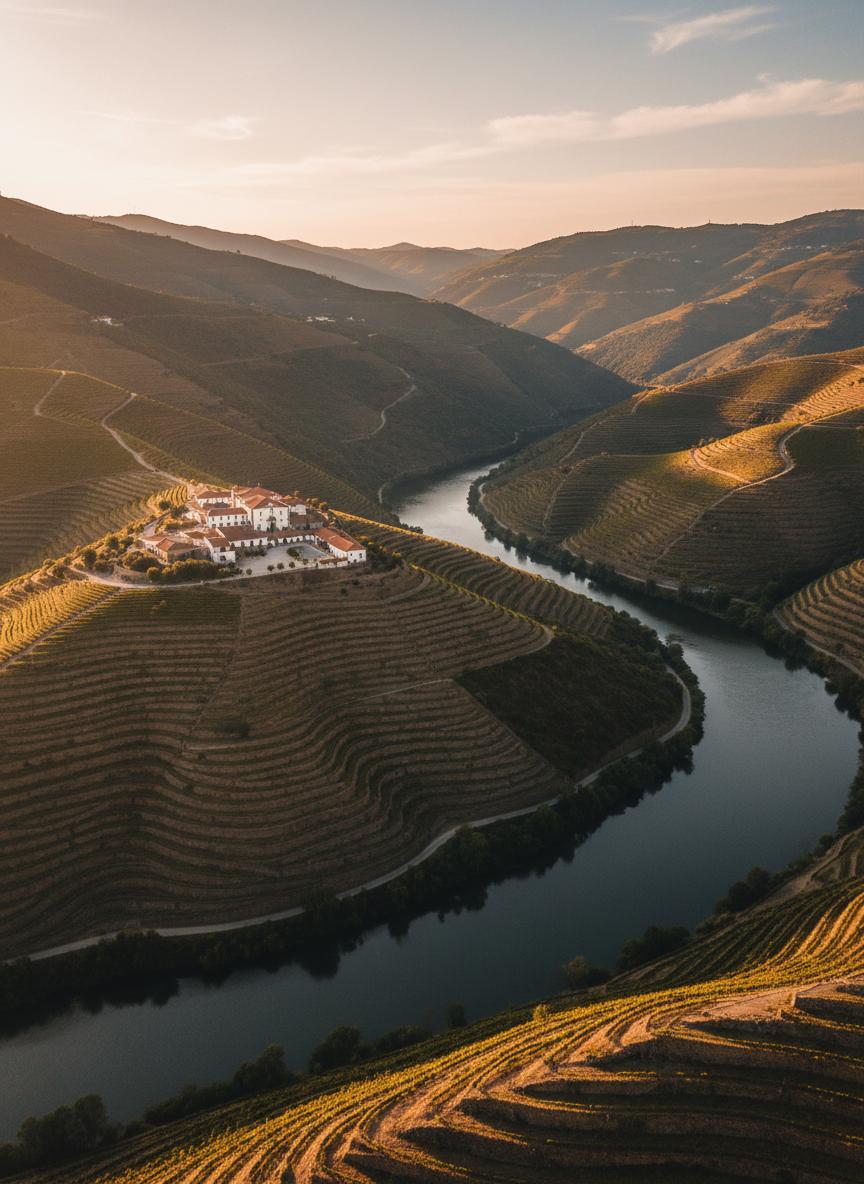
The Douro Valley stretches along the Douro River in northern Portugal, a UNESCO World Heritage landscape of steep, terraced vineyards carved into schist bedrock. Established as the world's first demarcated wine region in 1756, it is the historic home of Port and increasingly celebrated for dry red and white table wines. The valley divides into three zones: Baixo Corgo, Cima Corgo, and the hotter, drier Douro Superior.
Schist soils dominate, forcing vines to root deep for water and giving wines their characteristic structure and minerality. Hot continental summers and cold winters are moderated by the river, while altitude variation adds freshness to many sites. Old-vine field blends of indigenous grapes remain the soul of Douro winemaking.
Key Varietals
- Touriga NacionalPortugal's noble red grape, giving Douro wines deep color, floral perfume, and firm, age-worthy tannins.
- Touriga FrancaA widely planted Douro variety that adds elegance, berry fruit, and supple structure to blends and Port.
- Tinta RorizThe Portuguese name for Tempranillo, contributing red fruit, spice, and freshness to Douro reds.
- RabigatoA high-acid white grape that produces crisp, mineral Douro whites with citrus and floral notes.
Region snapshot
Climate
Hot continental, river-moderated
Rainfall
400-800 mm annually, increasing westward
Soil Types
Schist, granite, and alluvial terraces