Overview
Salto holds a special place in Uruguayan wine history as the region where Basque immigrant Pascual Harriague first planted Tannat in the 1870s, establishing the variety that would become the country's signature grape. His historic La Caballada estate near the city of Salto launched a wine identity so strong that Tannat was long known locally as Harriague. Today, Salto remains a symbol of Uruguay's viticultural roots.
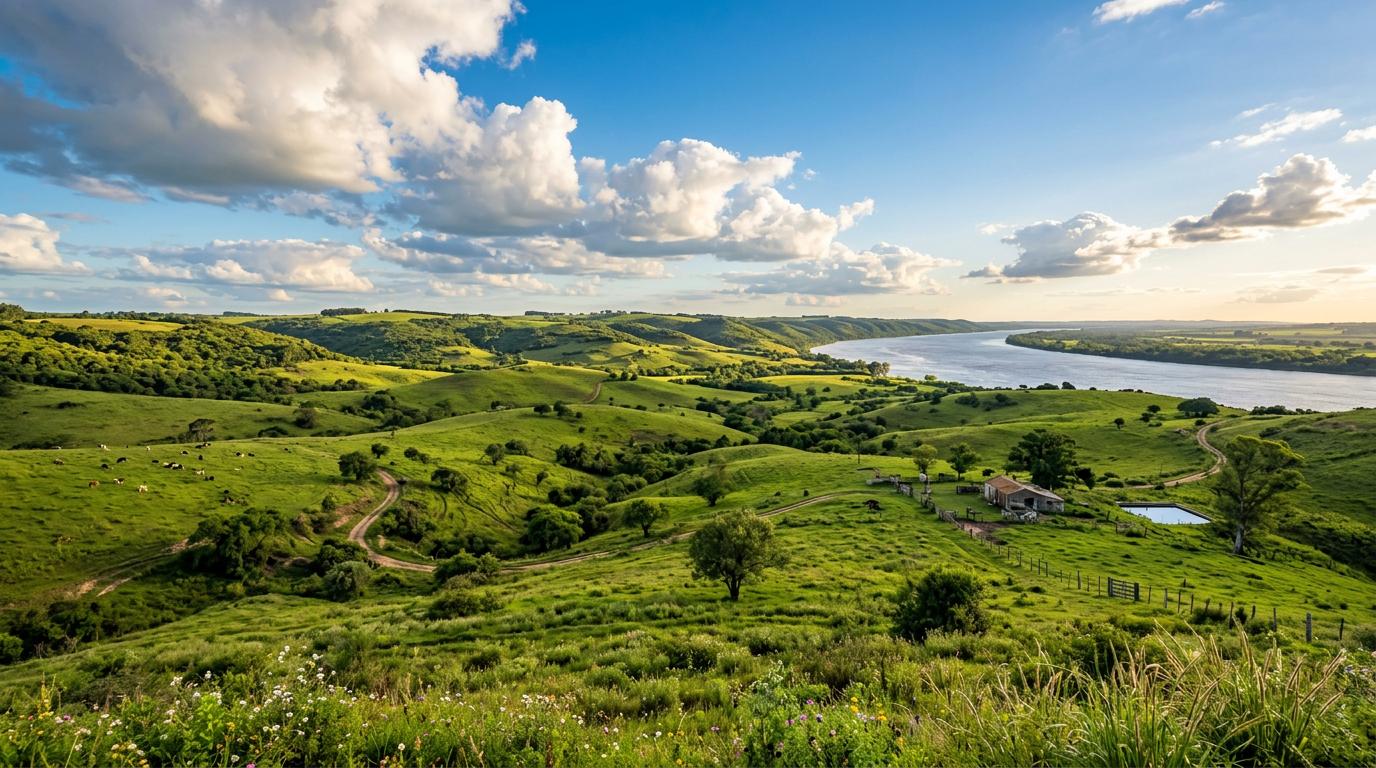
The climate is more continental than the southern coast, with hot days, significant diurnal range and lower humidity than the Atlantic zones. Silty and sandy soils over gravel provide good drainage, while the river moderates temperatures enough to preserve acidity. Salto Tannat tends to be well-rounded and approachable, with ripe fruit and softer tannins than more inland expressions.
Key Varietals
- TannatThe historic national grape, producing well-rounded, fruit-driven reds with soft tannins.
- Cabernet SauvignonA structured red that benefits from the warm days and cool nights of the river valley.
- MerlotA supple blending variety that adds body and plum richness.
- SyrahA spicy, full-bodied red that thrives in the warm continental conditions.