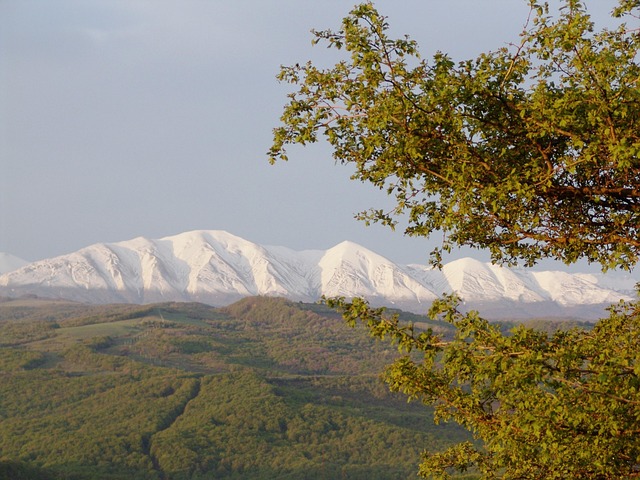
Overview
The Republic of Dagestan is Russia's southernmost viticultural area, stretching from the Caspian lowlands up into the Caucasus foothills at elevations between 150 and 1200 meters. Its vertical zoning gives growers a wide palette of microclimates, from hot, dry steppe near the sea to cooler, well-drained mountain slopes. The region has ancient ties to winemaking, with indigenous and introduced varieties cultivated in terraced river valleys for centuries.
Climate ranges from warm and arid on the plains to cooler and wetter in the western mountains, with rainfall strongly influenced by elevation and exposure. Soils in the key wine zones include ordinary carbonate chernozem, alluvial valley soils and mountain brown earths. Dagestan is notable for both table-grape production and technical varieties, with large plantings of Rkatsiteli and Saperavi alongside local and European selections.
Key Varietals
- SaperaviGeorgia's dark teinturier red, producing bold, structured wines in Dagestan's warm, sheltered sites.
- RkatsiteliThe region's most widely planted technical white, used for fresh, fortified and dessert styles.
- LevokumskyA Russian-bred white variety valued for its adaptability and fresh, aromatic wines in the foothills.
- AgadaiA local pink-skinned table and wine grape that yields fragrant, lightly colored wines.